Wednesday, January 1, 2014
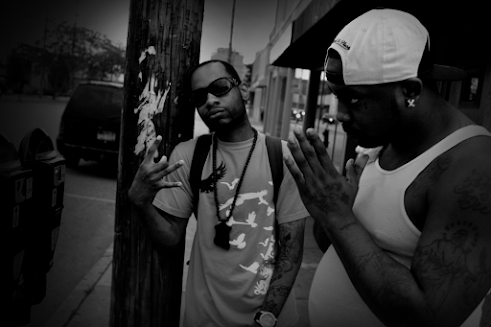
R-Stonze.Com Launches Today
Sunday, October 27, 2013
YouTube Said to Introduce Paid Service for Music
Friday, September 27, 2013
Bits: On YouTube, ‘Lyrics Videos’ Mark a New Genre
Tuesday, July 2, 2013
From Texas Statehouse to YouTube, a Filibuster Is a Hit
Sunday, June 9, 2013
Bits Blog: YouTube Founders Focus on New Video Tools
Jim Wilson/The New York Times Steve Chen, left, and Chad Hurley, the founders of YouTube, in 2011 after their Internet company purchased a site called Delicious.If imitation is the sincerest form of flattery, Twitter should consider itself very flattered.
Wanpai, a new smartphone video recording app available only in Chinese, bears a strong resemblance to Vine, Twitter’s fast-growing service that lets users shoot and post six-second snippets of video.
Perhaps even more flattering is that the Vine clone was created by Avos, the start-up created by the YouTube co-founders Chad Hurley and Steve Chen after they left YouTube. (Google bought YouTube in 2006 and is an investor in Avos.)
In a phone interview on Thursday, Mr. Hurley acknowledged that Vine was “the inspiration” for Wanpai (which he translated from the original Mandarin as “Play Shot”). He said that Avos’s development team in Beijing, which operates with some autonomy from the company’s headquarters in San Mateo, Calif., had developed Wanpai on their own initiative.
“They didn’t think Vine was serving the market,” he said. Vine “wasn’t translated and didn’t work well in China.” (Twitter is blocked by the Chinese government and Vine is tightly integrated into the social networking service.)
Mr. Hurley said Avos’s newest creation, MixBit, to be released in July or August, would be much more original.
Although he wouldn’t divulge many details about the project, which is in private beta testing, Mr. Hurley said MixBit would provide an “intuitive” interface to help people easily create content, much the way YouTube made it easy to post videos to a wide audience.
“What we ended up creating at YouTube is a solution for distribution,” Mr. Hurley said. “What hasn’t been solved yet is the act of creation.”
He said current platforms for creating and sharing images and videos, likeTwitter and Instagram (owned by Facebook), are too focused on self-promotion, which intimidates many people.
“It limits what they put online,” he said. “Unless it’s pretty, they don’t share it.” (Anyone who has spent even 10 minutes plowing through a heap of Instagram photos or Vine videos might beg to differ.)
MixBit will enter a crowded market. In addition to Vine, which has grown to 13 million users in just four months, Instagram is expected to soon introduce its own quick-video product.
Avos first surfaced publicly in 2011 when it purchased the Delicious social bookmarking service from Yahoo. It has since kept a low profile, working on several projects, including Zeen, an online magazine creation tool that was supposed to go live a year ago but is still stuck in beta.
In contrast to the situation with the Wanpai app, Mr. Hurley said, he is directly involved in MixBit’s development. “This is a tool that I’m going to use,” he said.
That contrasts with a certain video site that he used to run. “Me, personally, I don’t upload video to YouTube,” Mr. Hurley said.
Wednesday, May 29, 2013
Gadgetwise Blog: Q&A: Rescuing Lost Videos From YouTube
I have some old videos that I posted to YouTube years ago. I no longer have the original files on my computer, but is it possible to get copies from YouTube itself?
While YouTube frowns upon downloading other people’s video clips and does not provide its own built-in tools to do so, you can get copies of the videos you have uploaded from your own YouTube account. That is, of course, if the videos are still posted on the YouTube site and have not been removed.
Start by logging into your YouTube account. Once you have signed in, click on your YouTube user name in the top right corner of the browser window. In the menu that appears, choose Video Manager. On the left side of the Video Manager screen, click Uploads and select a clip to download. On the Edit button next to the thumbnail, click the arrow and choose Download MP4 from the menu.
YouTube allows you to download up to two of your videos an hour, so it may take some time to get copies of everything if you have uploaded a lot of clips over the years. The site has other restrictions for downloading videos from your account: you may not be able to download clips you had posted if those videos use copyrighted content or other restricted material.
Sunday, May 12, 2013
YouTube Introduces First Pay Channels
Monday, April 22, 2013
Judge Rules Against Viacom in Copyright Suit Against YouTube
Saturday, April 13, 2013
Gadgetwise Blog: Q&A: Respecting Copyright on YouTube
What happens if I use a copyrighted song as background music for a home video I want to upload to YouTube?
YouTube has various tools for protecting copyrighted material, but what happens depends on the music and who owns it. If no one lays a claim to the audio, your video is unlikely to be affected, but YouTube uses software called Content ID that scans uploaded videos and compares them to a database of music and video files supplied by copyright holders (often large entertainment companies) who own the rights to those recordings. The “content owner” here can decide in advance what to do if a match comes up between a user’s uploaded video and a song on file in the Content ID database.
The actions may vary by country and licensing laws, but a video that gets flagged by the Content ID system could be muted or blocked outright. Some content owners may opt for a “Track” setting that does not interfere with the video’s visibility or playback on YouTube, but does send them viewership statistics. Content owners can also choose a “Monetize” option that sticks ads on the video that generate payments.
If a video you upload trips the Content ID system, YouTube notifies you in the Copyright Notices area of your account. In some cases, it might be possible to remove the restricted song from the video (or replace it with another tune), as the site explains here.
In addition to Content ID database matches, YouTube also responds to specific removal requests from copyright holders. If you have used a legally protected piece of music or video in your clip and YouTube removes it after completing the request, the site slaps your account with a “copyright strike.” Getting a copyright strike may cause you to lose some YouTube perks like the ability to upload videos longer than 15 minutes. Deleting the clip does not remove the strike against your account. As in baseball, if you get three strikes, you are out — of YouTube, anyway. The site suspends your account and deletes your uploaded videos.
If you just get one strike, you can restore your good account standing after six months with no further violations and a trip through YouTube’s Copyright School tutorial. The site has a frequently-asked-questions page about its approach to copyright issues and a help guide to copyright and rights management that may be useful for more information on the topic.
Tuesday, January 1, 2013
YouTube Ban Lifted in Pakistan, for 3 Minutes
Thursday, December 13, 2012
Memo From Afghanistan: YouTube Ban Is Shrugged Off in Afghanistan
Sharifullah Sahak contributed reporting.
Wednesday, December 12, 2012
Bits Blog: Woman Accused of Robbing Bank and Bragging About It on YouTube
Screen shot via YouTube The authorities say Hannah Sabata stole a car and robbed a bank in Nebraska, and bragged about it on YouTube.This might seem obvious to some, but here’s a little life tip: If you steal a car and then rob a bank at gunpoint, don’t brag about it in a video on YouTube.
Hannah Sabata, a 19-year-old from Nebraska, stands accused of doing this very thing.
A YouTube user named Jellee Beanie, who the authorities say is Ms. Sabata, posted a seven-minute video last week bragging about a robbery of a Cornerstone Bank in Waco, Neb., where the county sheriff says Ms. Sabata stole $6,000.
Dale Radcliff, the York County sheriff, said in a phone interview that he had already arrested Ms. Sabata by the time residents started notifying him about the video.
“My doctor called me and told me about the video,” Sheriff Radcliff said. “Then we started getting a lot of other calls about the video from people.”
Sheriff Radcliff said that Ms. Sabata had been identified as a suspect by her ex-husband. She sent him a text message, the sheriff said, bragging that she “had a pile of money after robbing a bank and asking if he wanted to go get a new tattoo with her.”
The authorities said Ms. Sabata posted the video, titled “Chick Bank robber,” from her messy bedroom at her parents’ house. She was wearing the same clothes she had worn during the bank robbery, according to the sheriff: a pink and white striped T-shirt and black jeans.
A brief text description of the holdup was attached to the video: “I just stole a car and robbed a bank. Now I’m rich, I can pay off my college financial aid and tomorrow i’m going for a shopping spree.” It added: “Bite me. I love GREENDAY!”
“I’ve been sheriff for 19 years, and in law enforcement for 42 years, and I’ve never seen anything like this,” Sheriff Radcliff said.
In the video, Ms. Sabata writes on a pad of paper describing a play-by-play of the robbery, then holds up the pad to her webcam. It’s difficult to read because the camera creates a mirror image of the words, as most Web cameras do. For those who can’t read backward, the video had subtitles added.
Ms. Sabata paused in the video to smoke something from a pipe — the subtitle says it is a “full bowl of weed.” The Green Day song “Warning” accompanies the video.
At the very end of the video, Ms. Sabata holds up a large pile of cash and smiles. Sheriff Radcliff said the video would most likely be entered at any trial as evidence.
Sheriff Radcliff said that the case would be charged by the York County attorney’s office. Candace Bottorf Dick, the York County attorney, could not immediately be reached for comment.
Tuesday, October 9, 2012
YouTube to Serve Niche Tastes by Adding Channels
This article has been revised to reflect the following correction:
Correction: October 8, 2012
An earlier version of this article referred incompletely to Google’s plans to invest in original YouTube channels. Google will invest $200 million this year to market the channels, and an undisclosed amount for production on top of the $100 million it invested last year for production and marketing.
Thursday, September 27, 2012
News Analysis: Free Speech in the Age of YouTube
Somini Sengupta is a technology correspondent for The New York Times.
Monday, September 24, 2012
News Analysis: Free Speech in the Age of YouTube
Somini Sengupta is a technology correspondent for The New York Times.
Friday, August 10, 2012
Noted: A YouTube Series: ‘Real Actors Read Yelp Reviews’
Friday, August 3, 2012
Noted: A YouTube Series: ‘Real Actors Read Yelp Reviews’
Monday, July 30, 2012
Outbreak Zombie - The Government Cover Up (Mini Series Coming Soon)
This is going to be a new short mini series on my youtube channel StakkMoneyTV
The first episode will air on my channel August 8th 2012. In this series, I will talk about the recent " Zombie Outbreaks" that happened in the United States so far for 2012. I will show you guys real proof that the government is truly hiding vital information from us, and I will expose every single lie. I will break down the entire "Miami Cannibal" attack, explain how the News is used to feed us lies, plus more.
This will be the episode of a 2 part series. If you are into government conspiracies, the paranormal, and other deep subjects, then you will want to check out the first episode of "Outbreak Zombie - The Government Cover Up" on August 8th on my youtube channel.
Make sure you subscribe to my channel so you can get email updates on the show. By the way, I want to say thank you to everyone who tunes into StakkMoneyTV on a regular basis. Thanks to you, my channel is 200,000+ shy of reaching 1,000,000 channel views.
Visit my channel StakkMoneyTV
Wednesday, July 25, 2012
Media Decoder Blog: YouTube Offers a Way to Blur Faces, Protecting Identities in Videos
To help protect dissidents using video to tell their stories in countries with repressive government regimes, YouTube made available a new tool on Wednesday allowing people to obscure faces within videos uploaded onto its platform.
Protecting the identity of activists using social media has become a growing concern among human rights groups as authoritarian governments in some countries, including Syria, have been turning to citizen-generated videos of protests and other user-generated content on social media sites to identify and jail dissidents.
“Visual anonymity in video allows people to share personal footage more widely and to speak out when they otherwise may not,” Amanda Conway, a YouTube policy associate, wrote in a statement about the new tool. She pointed out that “human rights footage, in particular, opens up new risks to the people posting videos and to those filmed.”
Sam Gregory, program director for Witness.org, the leading human rights video advocacy and training organization, praised the move. Witness.org recently began collaborating with YouTube on a new human rights channel.
Mr. Gregory has been trying to raise awareness among dissidents and operators of social media sites about the importance of anonymity for activists when speaking out can put them at risk of retaliation.
In recent years, Mr. Gregory said, government officials in places like Myanmar, Iran and Syria have used videos of protests to identify dissidents. “There have been clear attempts to use citizen-shot footage to target people and punish them for speaking out against the regime,” Mr. Gregory said.
But Mr. Gregory said the tool would help more people than the activists involved in protests. He said that it would also protect the identity of people who want to use video to speak out about subjects like sexual assault and abuse.
YouTube said that the technology could be used for happier situations, too. Its statement points out that it could be used before sharing “the winning point in your 8-year-old’s basketball game” so that the child’s face would not be broadcast to the world.
Thursday, July 19, 2012
Media Decoder Blog: YouTube Offers a Way to Blur Faces, Protecting Identities in Videos
To help protect dissidents using video to tell their stories in countries with repressive government regimes, YouTube made available a new tool on Wednesday allowing people to obscure faces within videos uploaded onto its platform.
Protecting the identity of activists using social media has become a growing concern among human rights groups as authoritarian governments in some countries, including Syria, have been turning to citizen-generated videos of protests and other user-generated content on social media sites to identify and jail dissidents.
“Visual anonymity in video allows people to share personal footage more widely and to speak out when they otherwise may not,” Amanda Conway, a YouTube policy associate, wrote in a statement about the new tool. She pointed out that “human rights footage, in particular, opens up new risks to the people posting videos and to those filmed.”
Sam Gregory, program director for Witness.org, the leading human rights video advocacy and training organization, praised the move. Witness.org recently began collaborating with YouTube on a new human rights channel.
Mr. Gregory has been trying to raise awareness among dissidents and operators of social media sites about the importance of anonymity for activists when speaking out can put them at risk of retaliation.
In recent years, Mr. Gregory said, government officials in places like Myanmar, Iran and Syria have used videos of protests to identify dissidents. “There have been clear attempts to use citizen-shot footage to target people and punish them for speaking out against the regime,” Mr. Gregory said.
But Mr. Gregory said the tool would help more people than the activists involved in protests. He said that it would also protect the identity of people who want to use video to speak out about subjects like sexual assault and abuse.
YouTube said that the technology could be used for happier situations, too. Its statement points out that it could be used before sharing “the winning point in your 8-year-old’s basketball game” so that the child’s face would not be broadcast to the world.